Tuesday, 1 August 2017

The Lack in Machines - reflections on a philosophical panic

Only you and I
It means nothing to me
This means nothing to me
Oh, Vienna
- Ultravox, ‘Vienna’

1. Background

‘The feeling of an unbridgeable gulf between consciousness and brain process: how come this plays no role in reflections of ordinary life?

- Wittgenstein, ‘Philosophical Investigations’ §412 (1963)


As has been widely reported, Facebook recently shut down an AI which was beginning to develop what has been called its ‘own language’. This led many to conclude that the eschatological horror of sentient AI was upon us, mankind’s imminent destruction at hand. This was wrong; but why?
Bad luck, Donaghy, machines are coming for your job


One answer to this spasmodic response has since been moderated by some intelligent commentary by Tom McKay which established the real reason the machine was turned off. The experiment went wrong not because it was apocalyptic but because it wasn’t meeting its goals. The idea was to create a negotiating machine which could replace a human. Bad news for buyers. Whilst this was initially successful, when the AI was told to talk to itself, it created what looks like near-gibberish.


Bob: i can i i everything else . . . . . . . . . . . . . .
Alice: balls have zero to me to me to me to me to me to me to me to me to
Bob: you i everything else . . . . . . . . . . . . . .
Alice: balls have a ball to me to me to me to me to me to me to me
Bob: i i can i i i everything else . . . . . . . . . . . . . .

Creepy, then, but not threatening. This might frighten us, but we are not, if we believe Mr McKay, in danger from this AI.


Now, most people never think about AI, or the questions like at what point something moves from processing to being. Indeed, in the sixty or so years since Wittgenstein asked the question at the top of this page, it has been asked regularly only by people doomed to do so, which is to say philosophers. Periodically, however, moments of philosophical panic emerge where everyone gets stuck in. Well, misery loves company. I am going to be considering why the panic occurred. Why do we find what the machines are saying creepy? Why does it panic us?


2. Getting the Categories Right - Singular or Plural?


Firstly, is it right to talk about what we are reading here as a transcript of a conversation between two entities? Put another way, is this ‘an AI’ or ‘two AIs’?


From reading what the developers say, it seems to be clearly the former. The machines are in fact one AI, much as I can set up a videogame to play against itself. There are not ‘really’ two brains, because they are running the same script, albeit (perhaps) with different settings. Now, it might be different if I developed two completely different AIs and put them against each other, but that has not happened here. So, given that their purpose (to divide the objects) is the same, and they are processing the problem in the same way, I think we can dispense with loose talk of ‘Bob and Alice’. We don’t imagine that ‘Mario’ and ‘Luigi’ are in competition for the hand of the Princess after all. They’re the same sprite with different colour hats. Although they appear to be in competition, in fact they do not really need the objects being negotiated, indeed there are no objects. Instead they need a solution, they need equilibrium. So does my calculator.


Thus a better analogy would be perhaps with a single body allocating resources internally so as to meet certain requirements, e.g. to ensure that the heart has enough energy to beat enough times to circulate the oxygen and so on. What is being sought is a balancing of the books in a way that only appears to us to be competitive because that is the metaphor through which we are viewing it. In fact, these calculations are just elaborated versions of set problems.  They use picture language to represent this. But self talk is a strange thing, and this does beg the question: why can’t something be conscious simply because there is only one of them? After all, you are yourself conscious, but you are also an individual. This is a fair question and deserves answering.


3. The Private Language Argument and the Uncanny


The question drives at the notion of what happens when someone thinks to themself.


In the passage from the ‘Philosophical Investigations’ knows as the ‘Private Language Argument’, Wittgenstein asks that we imagine that explorers might come across a tribe where people spoke aloud to themselves constantly, when working alone. This, he says, would let the observer predict their decisions over what they were to do, to ‘see’ those decisions being worked through. Is this not what has happened her, even if the AI is singular and not plural?


Facebook’s computer scientists were in exactly this position. They were able to watch the (single) AI moving towards equilibrium. What if the language used words in a novel way, though, as began to happen in the experiment? Then the standards of correctness would, says Wittgenstein, become just that ‘whatever is going to seem correct to me is correct. And that only means that here we can’t talk about correct’. (PI § 259) ‘Whatever works’ would be the only rule. Thus, he goes on to say, it seems to make no sense to speak of ‘inner dialogue’, really, because such dialogue would lack all regulation. This is because it is only when standards of correctness are applied, when we externalise the impressions we have formed and submit them to the ‘rules’ of a particular language game played with other beings that our language becomes real.


Image result for annabelle
Of course, I'm as freaked out as anyone by all this.
Of course in this particular case the language used horrified the rule following community of you and me. It seemed in a strictly uncanny way that the AI had come to life. This feeling of uncanny horror has long been observed. In the late 1800s the German psychiatrist Ernst Jensch believed ‘that a particularly favourable condition for awakening uncanny sensations is created when there is intellectual uncertainty whether an object is alive or not.’ This is often used to explain the success of modern horror films about dolls come to life such as ‘Annabelle’ (2014). We feel a deep dread when we cannot work out if something is animate or not. This is what happened here.


4. Desire and Motive


Why should this ‘uncertainty’ emerge in this case? The answer has to do with desire and motivation.


We tend to define living beings as motivated. That is to say, they follow wants, desire, needs and so on. Wittgenstein is not the first writer to make this a problem for thought. Indeed, fellow Viennese, Sigmund Freud thought and wrote of little else. In the late Wittgenstein, however, we are drawn repeatedly to the question of how language may not have the meaning it seems to have, which is relevant in this case. Wittgenstein’s method involves stating that wishes are very particular types of experience. They lead us to act, and we can furthermore develop wishes without  or only somewhat related to objects (PI § 437), a wish that only ‘seems to know what will or would satisfy it’ (ibid. my emphasis) even if its object is absent or impossible. Thus they are remarkable facts of our existences, existences that can come to be dominated by feelings of non-satisfaction that develop a reality to us.


Where the confusion lies is best understood with reference to what Wittgenstein called ‘language games’ - games such as the AI here seems to play, although without criteria for ‘correctness’ and thus not games proper. To help us understand this, we can think of one specific type of language game: the play of children. Children in play may set up a shop and ‘negotiate’ over the stock. Perhaps it is a greengrocer. There they may ask for non-existent apples. A similar thing may happen on stage. In any case, the words,

‘“I’d like an apple” does not mean: I believe an apple will quell my feeling of non-satisfaction. This  [the latter] utterance is an expression not of a wish but of non-satisfaction.’ - (PI § 441)

This child does not believe the ‘apple’ is linked to his happiness - her real wish is to continue the game, perhaps.

The machines can be given the language of normal human life, including normal human wishing, in order to attempt to solve a type of equation, whereby objects need to be divided according to rules. That is surely not very frightening. It does not mean they will then begin to wish at all, let alone with the complexity of which a three year old is capable. After all, other types of machines may be given names; boats are. Only magical thinking leads us to think that the name gives it a matching personality, matching desires. The real question is: what do the machines ‘want’? Nothing. They are slaves to their programming. Therefore they can have no dominant feeling of non-satisfaction such as we think we perceive in the script above.


Then why are we frightened by that dialogue? People did not freak out over the AIs when they were translating Spanish or calculating stock returns, when a different kind of equilibrium was being sought. I believe the answer may be simply found in the vocabulary used. Specifically what is uncanny about that dialogue is the fact that it appears to contain the germs of wanting and of lack. This gives rise to uncertainty over the status of the AI as ‘living’.  To take the most commonly quoted, and most chilling, example:


Bob: i can i i everything else
Alice: balls have zero to me

The similarities with common everyday expressions of negotiatory language are a function of the AI’s original purpose, which is to pass a Turing test with negotiators. Thus remnants of desire, the everyday name for non-satisfaction, lie in the script because it was necessary to communicate with us. ‘I can i i everything else’ and ‘balls have zero to me’, as statements, are too close to ‘I can take everything else’ and ‘balls mean nothing to me’. This is intolerable to us not because it borrows and adapts human symbol systems but because of what sorts of symbols there are. We cannot tolerate it because it appears that the machines have begun to want.

Conclusion


The machines have not, in fact begun to want. This is a mistake in our perception of a set of symbols. This mistake was caused by an AI’s adoption of human language of desire which was itself a remnant of an earlier experiment. In fact, the AI sought equilibrium because that is part of its code. It was slaved to the task. It remains an open question whether forcing something to act like it wants things is enough to cause that to be so, though skepticism in this regard seems sensible. However, the panic here has more to do with our psychology, specifically in regard to what we find uncanny, than any real and present threat.


References


Freud, S. (1919) The uncanny.
Griffin, A. (2017). Facebook robots shut down after they talk to each other in language only they understand. The Independent. Retrieved 2 August 2017, from http://www.independent.co.uk/life-style/gadgets-and-tech/news/facebook-artificial-intelligence-ai-chatbot-new-language-research-openai-google-a7869706.html
McKay, T. (2017). No, Facebook Did Not Panic and Shut Down an AI Program That Was Getting Dangerously Smart. Gizmodo.com. Retrieved 2 August 2017, from http://gizmodo.com/no-facebook-did-not-panic-and-shut-down-an-ai-program-1797414922
Wittgenstein, L. (1963). Philosophical investigations. Oxford: B. Blackwell.

Sunday, 24 May 2015

Johnny Can't Read


"Teachers today frequently find that students who can't read a page of history are becoming experts in code"

Marshall McLuhan, "Understanding Media" pp.229

Everyone gets really hot about literacy rates. Ask people why and the same answer is thrown up again and again: Attention span! Yes yes, apparently it is all a question of working memory. (Engle 2002, Bosse and Valdois 2009 etc. etc.). It is an idea which has entered the public consciousness. Why don't we read? Smartphones! Google! This is also an idea which has been picked up during our present cognitive turn in education.

The question which this debate stands to leave aside is: what if attention spans are poor because the task is boring?

"Johnny can't read because reading, as customarily taught, is too superficial and consumerlike an activity...The problem is not that Johnny can't read but that, in an age of depth involvement, Johnny can't visualize distant goals"


- ibid. my emphasis

The Inattentive Reader - Henri Matisse
At this point it is traditional to haul out somebody who frequently reads five Victorian novels in an afternoon to make everybody feel bad. In this way the social norm is asserted and we can go back to skimming the abstracts of those papers we are sure somebody read. (Sure they did: ten of them in fact). 

We need to get rid of the idea of reading-as-engrossment. Reading is in fact an extremely precarious activity. When reading, we linger permanently on the edge of distraction. This is a fact reinforced by a painting called "The Inattentive Reader" by Henri Matisse which one of my teachers, in their wisdom, hung in the English Department common room at UCL's Foster Court.

In fact, the truth is that reading was always pretty superficial as an activity. In Pride and Prejudice, set at the heyday of the novel, Elizabeth Bennett sits on the edge of a conversation reading a novel with half an ear on the conversation. Eventually she drops the book and wanders over to join the party. Bingley's sister, when she tries to impress Darcy by declaring "How much sooner one tires of anything than a book!" is regarded with major side-eye as a fake-ass bitch. To Austen, reading is just a diversion: Mr Bennett uses it to escape from his wife, the girls to escape from tedium. A trip to a theme park of imagination it ain't. 

This is not an isolated event. Tolstoy's Levin in Anna Karenina is described as reading vaguely whilst his housekeeper gossips happily at him. It doesn't seem to bother either of them. My point is that reading is a gleefully, openly consumerist activity which when done well involves no real engrossment at all.

Sorry what was that about attention spans? I wasn't listening.
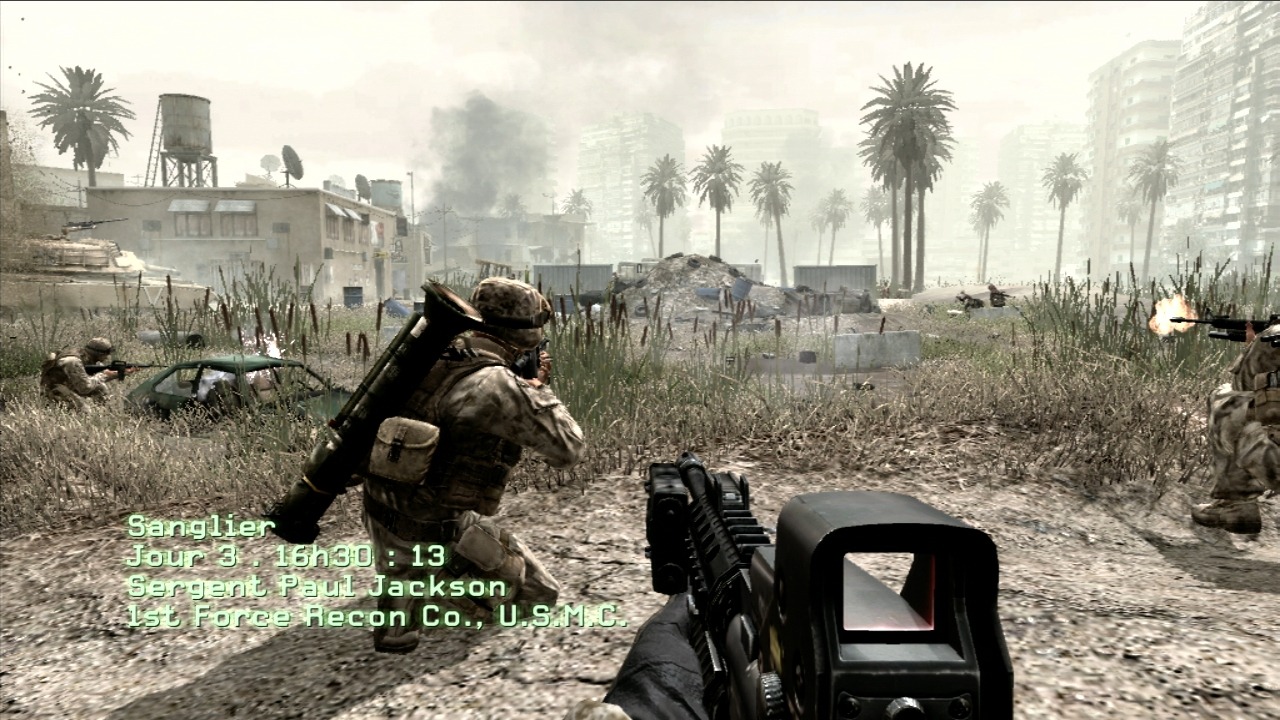
It is not that we are too superficial to read but rather not superficial enough. "Johnny", as McLuhan argues, is living in an age of "depth involvement". He is not distracted too easily but rather he demands too absolute an engrossment. The "Call of Duty" series demands a level of concentration that Austen would simply not have comprehended. To expect a book to be able to provide this is bonkers, and yet this is what those who are all-in on reading-as-engrossment peddle.

Reading-as-engrossment carries with it a set of cultural assumptions that are culturally assimilated at university and earlier: Reading is study. Reading is hard. Reading is concentrating. Reading is work.

Yet if students are interested in anything it is a kind of digital cataclysm, the onrushing clash of colour and sound provided by an IMAX, and XBOX and many other things with an "X" in them. It is this which has perfected "engrossment" and "depth involvement". It is hard work to play these games, and it requires concentration. These provide the impression, according to McLuhan, of emergence from the gaping maw of "superficiality" and "consumerism" in search for authenticity; this occurs even as we plunge deeper into the belly of the whale itself. Simply put, the students feel as if reading is not hard enough to be important, because that is what we have taught them.

It may be a tragic consequence of the quest for "realness" that just this depth involvement could prove to be consumerism perfected. 

Perhaps then what we need as teachers is to make a virtue of our weakness: superficiality and artifice, the very "fakeness" of reading, its precarious status as a diversion and a pastime may well be, as the advertisers like to say, its Unique Selling Point. 

It is not shameful to spend an hour on a single page. There is nothing wrong with "glancing" or "skimming" or "flicking-through". Why are we always supposed to be mining the smithy of our souls? Why does boredom have to reflect badly on us? What if poetry could be recaptured as Byronic "hours of idleness" rather than a sort of grimly determined ploughing for poetic features? What if we stopped talking about "getting into a book" and instead thought about literacy as something which returns us to, rather than keeps us from, the party?

(To be continued)

Monday, 18 May 2015

A Sonnet to Thor

My student is writing a sonnet about Thor. Mine was about Batman, but it was only meant as an example. However, he took to the idea. Specifically he took to the idea and defected to the dread banner of Marvel like a LITTLE JUDAS.

But I forgive him that.

There is a bit of an error with the scanning in the second quatrain but it is eminently fixable.

I lost my example sonnet "On Batman" because I was shutting down the computer too quickly. I don't care because it wasn't very good and now scholars can debate over it like Coleridge's never completed first draft of "Kubla Khan". I do not mourn it!

No really, though, the Thor sonnet is pretty great.

It makes me think as well that the idea of "trendy" versus "traditional" teaching is a crock of shit. I mean, here is a kid from inner London who has written a Shakespearian sonnet about a thousands-of-years old Norse God because he watched a film written by the bloke who did "Buffy".

I cannot, as they say, even.

Bleat as some will about cultural capital and heritage, Thor is an authentic honest to pagan-god mega story and Marvel's myth game is tight. And a sonnet is something real. What I like about poetic forms is they have the imperious certainty of Mathematics. You don't get something that's a "bit sonnety", it either is or it isn't. Petrarchan? Naw I did a Spenserian.

But as for the topic? Choose on old chap, plenty more creepily Wagnerian power players to pick from. Do Parsifal next! Or Hawkeye, sure, Hawkeye is good too. It makes no difference to me.


Thursday, 13 November 2014

The Holes of the Stephen King Mini Golf Course Which I Will One Day Own

The Holes of the Stephen King Mini Golf Course Which I Will One Day Own

1. Cujo (Par 3)

The car with the woman and the child stuck in it is a tricky ramp. The baying of a rabid St Bernard plays constantly whilst you try and make your shot.

2. Carrie (Par 5)

Knock your ball into a bucket of Pig's Blood to trigger the psychic death inferno.

3. It (Par 4)

A crooked dog leg with a large clown faced feature into whose mouth you putt. The ball is deposited in an ominous drain from which you retrieve it and the clown's mouth is full of knives.

4. Pet Cemetery (Par 3)

The putting green is shaped like the actual burial ground. Sink your ball in the wrong hole and it gets returned, covered in grey ooze and somehow...different.

5. The Shining (Par 4)

Takes place in a huge maze. To win, the ball must be shot through a smashed door panel behind which your alcoholic father intermittently appears, grinning horribly.

6. The Stand (Par 5)

Huge neon signs illuminate this Vegas themed fun-traction at night! Littered with corpses.

7. Misery (Par 3)

A huge typewriter dominates this impressive hole, which tradition dictates patrons attempt on their hands and knees whilst in the grips of cocaine psychosis. Watch out for the pig!

8. The Tommyknockers (Par 4)

Based on your own bedroom, painstakingly recreated by our designers to reflect a particularly bad summer when you were fourteen and nobody cared if you lived or fucking died, when the family just went away and left you and the pipes were making these weird sounds. Water Hazard.

9. Firestarter (Par 5)

This hole is really good. Shut up it is.

Thursday, 2 October 2014

Assembly 3 - Miyamoto Musashi and the Science of Strategy

I have recently become interested in the character of Miyamoto Musashi.
This follows a friend of mine lending me his "Book or Five Rings" over the summer. The book is a sort of manual, written four hundred years ago, by Musashi. It is partly a book of philosophy and partly a manual to a young swordsman explaining to him how to win.

Miyamoto Musashi by eijiokabayashi (source: deviantart)

Now, there has always been an interest in this sort of thing. Sun Tzu's "Art of War" was very popular a few years ago. But Musashi is different, because he is interested in practicalities all the way.

Musashi became interesting to me just because of this passage,which grabbed me right away. In it he describes the battles he has won. It really is very impressive:

"I have trained in the way of strategy since my youth, and at the age of thirteen I fought a duel for the first time. My opponent was called Arima Kihei, a sword adept of the Shinto ryū, and I defeated him. At the age of sixteen I defeated a powerful adept by the name of Akiyama, who came from Tajima Province. At the age of twenty-one I went up to Kyōtō and fought duels with several adepts of the sword from famous schools, but I never lost."

Now you can say this sounds arrogant, but if it is true this is very impressive. I looked into what a duel meant at this time and it seems that in at least some cases these were to the death.

Still, what makes it even more impressive is that Musashi usually only fought duels with a Bokken, which is a kind of club.

So the question is how he did it. From my reading I have discovered two important ideas. He comes back to these ideas again and again in his "Book of Five Rings".

First, study the trades.

The first task he sets students is to pay attention to everything that is going on around you.

He describes watching master builders and carpenters and learning from their skill how to improve his own technique. The way they raise a roof can teach you to raise a defence, and so on.

So firstly, take an interest in everything.

Secondly, Musashi talks about being in the right place at the right time. According to one story, Musashi fought a duel with Sasaki Kojirō  who was called ""The Demon of the Western Provinces" and who wielded a "nodachi."

Now, a nodachi is a sword as tall as a man. Yet Musashi is meant to have defeated him with his Bokken.

The battle took place on an island in the middle of a lake. Musashi arrived by boat and, according to one legend, he had carved his Bokken out of an oar on his way across.

Yet he defeated this giant with his huge sword. How? Well, one theory has it that he had waited until the sun was in the right place in the sky to dazzle him.

This fits with what we know about Musashi, that he was a master of strategy. One key part of strategy was to wait for the right time.

So what can we learn from Musashi?

Firstly we can learn to take an interest in things. Interesting people are interested in everything. Not only that, we can learn from everyone. You don't need to restrict yourself, and you can never know where the missing piece of the puzzle will come from. Whatever you're working on, you should take the concerns of others seriously.

Secondly, pick your moment! So many problems students have come from not choosing their moment. They try and have a discussion with a teacher at the wrong moment. They want to explain themselves right now and so they get sent out of the detention because they make themselves a nuisance.

And so on.

We don't have to do everything now! Be like Musashi and wait for the right moment: you'll be surprised how much easier you find things if you ask yourself that question. Is this the moment, or is it not?

References

Musashi - The Book of Five Rings

Wednesday, 17 September 2014

Assembly: Maya Angelou and Courage

Sometimes students say, “I wasn’t doing 

Well, for evil to flourish, all it takes is for good people to do nothing.

Stonewall have a new campaign called “no bystanders”. If you go on their website you can keep up to date with it. 

What is a bystander? A bystander is someone who knows something is going on and doesn’t do anything.

It can feel very unfair. We might know somebody is being horrible to somebody else but feel like we can’t stop it.

Or we might get involved in the wrong way, by throwing insults back and make it worse.

To help us with this problem I like to look for people who have stood up for what was right in the past.

Today I am going to talk to you a little bit about Maya Angelou.

Who was Maya Angelou?

This was a remarkable woman, somebody who knew Dr Martin Luther King and knew Malcolm X. She spoke at the UN and at the inauguration of US President Clinton. 

She lived all over the world and every country she went to she would learn their language.

She was also a mother, a poet, a novelist, a teacher and a professor.

The journalist Gary Younge said, “When you look at Maya Angelou’s life you wonder what you have been doing with your own."

When she was your age, though, everyone thought she was stupid because she didn’t speak.

In fact, she was afraid, that if she spoke up what she had to say would kill people. So she knew a lot about the power of words.

Once she discovered how to use them properly though, she really went for it.

She writes a lot about the role of courage, and having the strength to speak up: that’s how she connects with what I am saying today.

Angelou thought courage was the beginning of goodness. Once you have the courage to stand your ground you can start to be good not just when the teacher is watching or when you’re in a group, but all the time.

So how does Angelou think we get there? Listen to this

“I will not sit in a group of black friends and hear racial pejoratives against whites. I will not hear "honky." I will not hear "Jap." I will not hear "kike." I will not hear "greaser." I will not hear "dago." I will not hear it. As soon as I hear it, I say, "Excuse me, I have to leave. Sorry." Or if it's in my home, I say, "You have to leave. I can't have that. That is poison, and I know it is poison, and you're smearing it on me. I will not have it." Now, it's not an easy thing. And one doesn't all of a sudden sort of blossom into somebody who's courageous enough to say that. But you do start little by little. And you sit in a room, and somebody says -- if you're all white, and somebody says, "Well, the niggers -- " You may not have the courage right then, but you say, "Whooh! My goodness! It's already eight o'clock. I have to go," and leave. Little by little, you develop courage. You sit in a room, and somebody says, "Well, you know what the Japs did then, and what they're doing now." Say, "Mm-hmm! I have to go. My goodness! It's already six o'clock." Leave. Continue to build the courage. Sooner or later, you'll be able to say out loud, "Just a minute. I defend that person. I will not have gay bashing, lesbian bashing. Not in my company. I will not do it." 

"Equal rights, fair play, justice, are all like the air; we all have it or none of us has it. That is the truth of it."

So this is what I am talking about: Maya Angelou didn’t think you start off doing the right thing, but she thought you can take a step. Real bravery for her isn’t about lashing out but about standing up.

So next time people start to say something unpleasant about someone else, maybe the bravest thing you can do will be to stand up and walk away. 

If it is, do it.

Sunday, 14 September 2014

Assembly: Habits

abits

I once had a teacher who would say to us, in Latin (one of several languages he spoke), “Usus est Tyrannus”: Your routine is your master. That is the topic of my assembly today.

Aristotle said that what we repeatedly do, we become.

He explained this by saying:

“The things we have to learn before we can do them, we learn by doing them, e.g. men become builders by building, and lyreplayers by playing the lyre; so too we become just by doing just acts, temperate by doing temperate acts, brave by doing brave acts.”

Habit is stronger than wisdom!

So can we change our habits?

My morning routine:

shower, breakfast, tea, dress, tea, tie, hair

One thing out of order and I have a bad day. That’s not a joke.

Now, you might think that sounds boring, and it would be if someone else had invented that system. But because I invented it, I consent to it. That means I am only stood here right now because I choose to be. That’s not boring!  That’s freedom! 

So we started by saying our routine was our master, and indeed it is, but we have a choice. We can either decide on our habits, or let our habits decide for us.

You might have gotten in some good habits last year. Keep them up. Realise that they are probably the most valuable things you possess. More valuable than the phone in your pocket.

expectations about Uniform,Homework etc...you can probably imagine.)) expecting...((Here I seT

But as corny as it sounds, doing the right thing IS its own reward.

The person you are when nobody is looking, that's who you really are.

Last year, you might have gotten in some bad habits. It happens. But that doesn’t mean it can carry on. Don't think you can get away with that. If it does carry on, like Aristotle says, you will only be led further and further into bad habits and, ultimately, and this is neither joke nor exaggeration, you will become a bad person.

In fact, the Greek word "Ethike" from which we get Ethics refers to "Habits".

I leave you with a quote from Aristotle again.

“It makes no small difference, then, whether we form habits of one kind or another from our very youth; it makes a very great difference or, rather, all the difference.”


References


Aristotle - Nichomachean Ethics


Sunday, 31 August 2014

Top Ten Tips To Help NQTs With Instilling Fundamental British Values


So you're an Newly Qualified Teacher and you're not sure whether you're really ready to whip a class into a frothing brew of jingoistic nationalism? Don't worry, you're not alone. Luckily the government has done all the difficult thinking about ethics so you don't have to. If you're still too poor, stupid or foreign to understand the difference between right and wrong, then just follow this easy to use guide and you'll have your pupils getting misty eyed over pints on the village green in no time.

1. Have a British Prime Ministers word search ready to go at all times. I remember a more experienced teacher telling me this in my first year and it has never failed me yet.
2. Remember that the best way to teach about Democracy is to give them no experience of it whatsoever.
3. Line them up for as long as it takes you to shriek the National Anthem before letting them in. If they can't manage this, do Jerusalem too.
4. Is your picture of David Cameron's massive face massive enough? One common mistake that NQTs make is not having a truly enormous picture of David Cameron's massive shiny face. Don't get caught out.
5. Establish expectations early by reading the Constitution in its entirety. Yes I know the constitution is uncodified, just read every British law since the Magna Carta. They will respect you for it.
6. Remember that children are basically tiny, X-Box obsessed terrorists: treat them accordingly.
7. DON'T MENTION GOD, EVER.
8. EVEN FOREIGN GODS. ESPECIALLY NOT THEM. WHAT ARE YOU, MENTAL?
9. Don't be afraid to ask from support from people who are more British than you if you're struggling. They will be understanding, after all, they were less British once. Joking.
10. Don't blow your top! just do what the British have always done: keep members of the underclass on standby ready to inflict maximum misery on your enemies whilst affecting surprise and dismay that it 'had to come to this'.

There you go, and best of luck!

Based on an original idea by Tait Coles.

Tuesday, 26 August 2014

Witness for the Prosecution: On Mary Midgley's "Are You An Illusion?"

In addition to anticipation of divine presence in everyday living, witnessing also involves an affirmation of understanding among Black women, as a collective group, that God had and would work in the lives of church women. On a community level in religious services, church members may take time to give a testimony of how God has moved in their lives. Then, after telling their story, the speaker engages the audience by stating, "Can I get a witness?" 

Within this context, the speaker is asking if anyone has experienced the move of divine intervention similar to her own experiences. In turn, members within the audience express affirmation through hand clapping and shout of "Amen!" 

(A Cultural Case Analysis of the Works of Nannie Helen Burroughs, emphasis mine)

The act of witnessing is not the same as the act of observing. An observer can be silent. A witness can 'be silent no longer'. An observer makes something an object of record. A witness makes something an object for discussion. Mary Midgley, it seems, can be silent no longer.

Her new book, "Are You An Illusion?" (Acumen 2014) is best read as a cry for someone to come forth and stand witness. What has moved in her life is not divine, but it is no less moral for that. What she wishes is to have it acknowledged that we are daily 'told we are mere peasants...:and we may well hear this dictum as a simple insult: "you are nothing"' (Midgley 2014 p.138). This is a message that might be, wrongly, ignored if it was coming from the people of Ferguson, a person with Downs syndrome, a Palestinian. It is interesting, however, to hear this coming from a widely published European thinker of Midgley's standing. Surely she, at least, enjoys the privilege of not needing a witness!? Yet she says not, and what prompts her to do so, in this book, is a philosophical "gap" which she perceives operating in unjust, bullying behaviour.

What this gap is is the "remarkable gap that has opened up between common sense and today's scientific orthodoxy" (ibid. p.1). This, she believes, is becoming a scientistic religious doctrine taken on absolute trust. Much as the wilder parts of Scientology's doctrine, like Xenu the alien overlord, are referred to as a "ring of fire" to separate true believers/zealots, so the "secret knowledge" of some rational materialists runs directly contra common sense and divides the merely intrigued from the high priests. Amongst those she puts in this latter camp are Crick, Greenfield and (of course) Dawkins. The most outlandish claim she identifies is that the self "is not really there", a statement which runs so roughshod over common sense it can surely be wrongfooted by the playground rejoinder, "Who says?"

Midgley's guiding metaphor is of a "garden of knowledge". Humanity, she claims, should be concerned like any gardener lest one "plant" overrun the rest. Science, she says, is a "subculture" which should be kept within bounds. In this she follows thinkers like Williams (1995) in saying "There is no physics but physics": a statement which empowers even as it limits. Meanwhile, Williams says, "morally unimaginative kind of evolutionary reductionists" are "the people I really do dislike." This is presumably because extreme cases like "Less Wrong" certainly seem to contain elements of fanaticism including end-of-the-world elements. Google "Lesswrong cult" if you're interested in this.

Midgley takes pains to defend her argument against the most predictable criticisms, which I will mention. Her target is not, she says, "science" but "scientism". The substance of this debate can be followed in this RSA discussion (Q and A follows a brief presentation). In a brief discussion, Carl Gardener (@carlgardener, well worth following) and I differed on whether she had in fact selected this target as precisely as she claims. Certainly there are criticisms that can and have been made of Midgley's understanding of science especially the old Left/Right brain distinction and her handling of natural scientific concepts (Everitt 2014) but it is in the innovative step she takes to address bullying and injustice that I believe this work becomes interesting. In identifying cyberbullies (p.22) and the specific bullying 'mood' which says or implies "You are nothing", something she conflates with the denial of selfhood, I believe she makes a hugely important point. In three areas she is especially sharp: Testimony, Misogyny and Shame. I'll briefly cover them

The Assault on Testimony

One of the main weapons used in the struggle for civil rights, as well as in the less reported everyday battles of humans to live with dignity, is testimony. However, this is endangered by the ideology which attacks testimony as such. As she puts it, ""Anecdote" is used to discredit any account of concrete events" (Midgley 2014 p.95). That the particular set of behaviours that involve someone who has been bullied opening up their heart are volatile, emotional and not always logically sequenced explicitly should not discredit it. Yet saying "they're just sounding off" is to attempt to do exactly that.

Saying "don't get upset", or recollecting Cameron's "Calm down dear" is not to be seen as harless 'banter', according to Midgley. Rather it is called part of a wider project where everything is "reducible to matter". This makes criticism of the intangible, the 'social' that much harder. This is what Midgley calls, "the assumption that the direct deliverances of our own experiences are worthless" (p.54).

Can I get a witness? No. You can get an observer, and they will watch you closely, and make notes which you will not be allowed to see.

Misogyny

The book is full of striking insights into women in science, and their struggles. Jane Goodall, for example, was apparently discouraged from naming the apes she was observing at first because it was considered to endanger her objectivity. This is now a common practice.

Yet this book does more than just cherry picking some "girls done good". Consider this statement from Joseph Glanvill:

"The Woman in us, still prosecutes a Deceit like that begun in the garden, and our understandings are wedded to an Eve, as fatal as the mother of our miseries. And while things are judged according to their suitableness, or disagreement to the gusto of the fond Feminine, we shall be as far from the tree of knowledge as from that guarded by the Cherubim" (quoted ibid. p.119)

This indifference to the "fond" feminine side of our nature, which seems to be a sort of "secondary" or subjective quality of the world, does two things. Firstly it genders experience in opposition to reason, and secondly imposes a hierarchy on it which denies that equality can ever be. In other words, it is the very substance of what feminism disputed. Even this, however, does not take the new and novel step which we now see taken of saying that experience is "mere nothing". The struggle, therefore, which we see in terms of the "objective" search for access to resources or jobs is not enough. If an essential part of your being, whatever gender you identify as is considered lesser or even "nothing", then we are all mutilated, damaged.

To respond to this, as per the "Testimony" discussion is to become "emotional" and therefore not to be regarded. But we actually can regard this bullying scientism and, perhaps, must.

Shame

The final infamous strategy which struck me on reading this book was the idea that we should be ashamed. Of what, precisely? Of our subjectivity. On this point  her call to arms to those who suspect the rot of bullying has penetrated deeper than we suspect is unequivocal:

"Subjectivity is not a shameful secret" (p.56)

That is to say, we need not feel that our "fond" natures make us weak, pitiful or pathetic. To make another person feel ashamed of what they feel themselves to be ought not have any place in our dealings with one another. What's more, shame becomes terror so easily: our careers, our social standings can feel in danger because we love, feel, dream, intend and fear. Besides which, she says, this is not even the case where people like Dawkins are concerned! For they enjoy a very strong right to command the voice of their own mad God:

"The universe contains, at bottom, no design, no purpose, no evil and no good, nothing but blind, pitiless indifference"

(Richard Dawkins, quoted Midgley 2014 p.82)

That this voice of "pitiless indifference" is precisely the rhetorical mood Dawkins adopts should give you some idea of who or what he thinks he speaks for.

Conclusion

I have gone on longer than I intended, and I intend to say one thing more. The scientist cause as Midgley paints it is surely lost before it has begun. After all, losing the ability to interact with a majority of people without causing them shame, loss of confidence, and disgust at one half of humanity is not just morally loathsome, it must surely fail a first test of the materialist philosophy that this book criticises, which is that of remaining in touch with the real world. For attitudes are real features of human subjects. If we cannot act in a way which interacts with these, then we're out of touch with a reality! Midgley is not, then, dealing with very thoughtful opponents. She is asking that we join her in witnessing a very particular kind of madness which has some people in its grip, rather than sounding a call to arms. What is needed is not, she seems to think, aggression but honesty.

When, late at night, I flicked through the responses to Dawkins amongst his supporters after his bizarre attack on people with Downs syndrome and saw in their fawning responses the words "sheeple", "idiots", "stupid" flickering on and on, I could not help hearing Midgley's words again: "a simple insult: You are nothing".

I am not. Now, can I get a witness?

Wednesday, 20 August 2014

The Early Reading "Debate": A False Controversy

In this post I hope to throw light on one way in which learners and instructors are turned against each other. I propose dialogue as a solution and use a disagreement with a colleague over teacher training to address that.

I asked Dr Andrew Davis in my previous post how he thought teachers could improve if there was no such thing as a "method" for them to "try out" by way of improving their practice. You can read his full response on my previous post. Davis' words are in italics throughout.

"Yes- some teachers are better than others, and yes, it’s perfectly reasonable say that some teachers’ approaches are ‘better’ or ‘more effective’ than others. It’s how this should be conceptualised that divides me from those opponents who appear to favour teacher-proof and pupil proof methods, and who appear to believe that such methods have been researched. "

Davis accepts subject knowledge as important, and says that to restate this is "unoriginal". His question regards how we teach anything at all. His contention that the putative "methods" which have come to light can solve the problem of teacher quality are nonsense (I may be overstating this) forms the crux of my question to him: if trainees believe they are improving through applying "methods", as well as state that that is how they are improving, do we not endanger the project of teacher development by undermining the concept? 

In Davis reply his conceptualisation of the question "what is the gap between good subject knowledge and good teaching?" calls to mind the famous "learning paradox". How do trainees get from the A of subject knowledge to the B of great teaching? The learning paradox asks a similar question of how we get from A to B. Plato describes an incident where Socrates leads a slave boy through a number of suppositions and deductions leading him to correctly deduce a geometrical rule. The problem is not what the rule is (subject knowledge) but rather how we arrive at it in a way that is independently understandable. This means the student conceiving of the rule not as something which makes sense "because Sir or Miss says so" but rather the student seeing that the rule stands independent of the situation of being, for example, someone else's inferior in learning, experience, time served etc. The right way of carrying on in, for example, geometry, must seem right to the student regardless of context if we are to regard the knowledge as "taught".

Take the example of grammar. A sentence, as it was taught to me, must contain a verb. To convince a student of this one way might be to give him or her a piece of writing and ask him to find the discrete sentences, and then find the discrete verbs. If this is done after giving the first principle, "sentences will contain verbs" then the student is able to deduce that the rule is indeed the case, independent of the teacher. However, in order for this to happen the student must accept that the page of writing is indeed writing. And how this happens is very mysterious, because it happens in the student's mind. What does it mean for the student to believe that the page of squiggles is indeed a page of writing. I don't mean by this "what is writing?" but rather what is it about writing, and students, that gives them this relationship to each other?

This is paradoxical because without trusting that it is writing the student cannot learn about writing, but without having learned about writing the basis for that trust is unclear. Similarly in Plato's example, the slave boy makes his own inferences, but in a way that is not visible in the situation. He ends up drawing the correct conclusion for himself, but at the beginning he "did not know". Plato concludes, controversially, that we all are born knowing everything, forget it and then subsequently "remember" it through learning.

This is not to say the teacher does nothing. Socrates compares himself to a midwife, "delivering" peoples' knowledge. The pupil, like the expectant mother, is the one who has to push!  How does this compare to Davis' view of what teachers do?

"The practical knowledge of teachers is a kind of practical wisdom or phronesis, in which experienced teachers over the years steadily extend a rich and complex repertoire of strategies from which they constantly select in different ways to suit the pupils with whom they are dealing at any one time. When teachers 'improve', they extend this repertoire, and improve the judgements behind their unceasing selection from their repertoire.

The ‘repertoire’ includes possible pupil tasks, ways in which the teacher might explain an idea – analogies, metaphors, stories, etc, knowledge of relevant resources and appropriate questions that might be put to pupils to advance their knowledge, understanding and thinking."

His response draws on an Aristotelian idea, that of phronesis. His full response then sketches a highly elaborated picture of the different skills a teacher may draw on,  the "differences", the variations which mean "sometimes a word is "read" by attending to context and sometimes not". I am interested in the word "sometimes". In Plato's account of the learning paradox the rule being deduced is not practical wisdom but "sophia" or absolute wisdom. Geometric rules are often conceived of in this form: as immutable, heavenly truths. They are not "sometimes" true. They "just are" true, something the Greeks called "sophia".

However, Plato is as so often using Socrates to hide the other side of the dialectic. Ask a midwife what the "best" way to deliver a baby is and you are likely to hear the kinds of language Davis uses. "Sometimes" it happens one way, women are "different". This is the language of practical wisdom or phronesis. Thus Socrates' characterisation of himself as a "midwife" puts the learning paradox into a new light. Whilst what is "delivered" out of the learner is immutable, it is not "delivered" to the learner in the sense that an industrialist "delivers" on a new order of parts to a customer.

So, if I have understood Davis correctly, we are supposed to conceive of the trainee teacher in the same way as Plato's slave or any other learner; that is to say, the "truths" that they arrive at will be formulated by unique moments of realisation, challenge, failure and frustration. This is because they, like all learners, are different from each other. I quote the final section in full:

"When novice teachers learn from expert teachers, this rarely, if ever, includes any kind of simple copying or mimicking the behaviour of the expert. It is rather a matter of being exposed to the subtle influence of someone with a high level of a particular form of phronesis. If an expert teacher watches a novice, with a view to helping the latter, the help would only rarely consist of the expert saying – ‘At time 'T' in the lesson you should have performed this specific action (said these words, set this specific task, etc)’. It is rather a matter of a dialogue in which the expert helps the novice to review the choices available to her at time T, and to think why alternative actions might have been ‘better’ than those she actually performed. The expert might also come up with more options than the novice was aware of." (my emphasis)

Do I feel my question has been addressed? Well, yes I do and no I do not: yes because I see how the idea of a comprehensive "method" which can meet the needs of all learners is opposed to the idea of a "repertoire" of different things to try as different situations arise. On the other hand, this account remains, quite understandably, oriented towards the view of the trainer rather than the trainee. In the spirit of the abovementioned dialogue, let me put the trainee's imagined view, based on my experience.

I trained more recently than Davis (although far be it from me to rub it in) and with the memories sort-of fresh in my mind let me say that firstly, I now see that a lot of the "techniques" I thought I was seeing I can recognise were far more ad hoc than I imagined. So far, so good: Davis and I appear to agree. Let's take the "technique" of chairs in a circle, full class debates. I once observed an excellent teacher orchestrate this, as I took it, daring 'method' with challenging students. The class were well prepared, contributing, referring to good resources etc. I took the experienced teacher's throwaway comment at the beginning "oh it won't be anything special, just sit and watch and join in if you like" as false modesty when I saw what they accomplished. I now realise that lessons like this in fact will just arise from planning in an experienced teacher's class without them thinking to themselves "today I shall deploy lesson pattern 234.5b Circular Discussion": but I thought that was what they did! In other words I couldn't conceive that the teacher's practical wisdom was creating the students scientific concepts, or that phronesis was creating sophia, OR (most significantly) that unlike was creating like. This is a hard lesson! As I wasn't ready to see this, I HAD to see it in a way it was, by Davis' lights, emphatically not, viz. as a method. So I did.

But seeing it in that way enabled me to get to this point, where I am able to see it differently. I can now see it from Davis' point of view, but very much remember seeing it from the opposite point of view. Was one right then, and the other right now?

This puts us at a pretty pass, and one I am not sure I can bridge. Do we put "teaching methods", then, under the category of "necessary falsehood"? Or do we, instead, confront trainees with the awful/wonderful truth early on: that there are no shortcuts, no hard and fast "solutions", just experience? What might we risk if we do the latter?

Faced with a student teacher doing what so many of them do end up doing, namely sobbing wretchedly, could *I* resist telling them that there was a "Magic Feather" they could carry into the next classroom? "Try this resource/method/programme...it's very good!" And if they do use it, and they have a sudden, dramatic breakthrough with a class, is it even as fictional as Davis is suggesting?

To a good midwife, it is just a question of getting the baby delivered. Nobody cares, when they hold their child in their arms, about whether they delivered it on their elbows, their hands, their knees or in a swimming pool. Similarly, when we know something we did not know before, we don't need anyone else to tell us it is beautiful, and we forget very quickly exactly how we got there. I am always struck by how vague everyone's recollections of school/training actually are, how few actual lessons they can remember, compared to how much wisdom it gave them. This is something teacher trainers must realise: once their students are teachers, none of this will matter to them very much.

My conclusion, then, is that the entire "controversy" over "who is right" begins to look on reflection like an odd curiosity which does not originate in the experience of learning. And if it does not, where then could this highly political, profitable, media-friendly opinion storm originate?

Diagnosing this might relieve us, as a profession, of a lot of anxiety.

Thursday, 14 August 2014

Phonics, Snake Oil and Campsites

When you tell someone your area of study is "Philosophy of Education" they quite often ask if you study "Philosophy OR Education?" as if they've misheard. The relationship is not always easy to explain, and I probably do it quite badly very often. The late controversy about the contribution by some philosophers (notably Andrew Davis and Dave Aldridge) to the debate of Systematic Synthetic Phonics has been an extremely good example of how to do it rather well. In the responses to that debate a number of concepts have been deployed that need unpacking. 

One comes when Davis uses his idea that Philosophy can identify a commonly used concept such as "teaching methodology" as meaningless. Sometimes we use the expression "without content" to do this. This means that some concepts , often embarassingly pravalent ones, can be discovered to be like those sets in cowboy films.  These ideas, often rather grand-sounding, can on close examination turn out to be simply clapboard paintings held up by struts at the back.

Naturally enough this turns out to be a problem if you buy what you think is a perfectly serviceable Saloon, perhaps intending to branch out into barkeepin' or piano playin', but then discover you've been sold a clapboard frontage no more profitable than any other billboard. And this happens with ideas too. For a long time people were trained in the use of ideas which turned out to be nonsense such as Newton's concept of the "aether" or, as some now claim, String Theory. I am not a String THeorist myself, or even a physicist but it is quite possible that the idea will turn out to be wrong. Understanding that this is doubtable does not mean understanding it as doubtful. I do not feel under pressure to know everything, so on some matters I am free to say "I understand there are two sides to this."

This does raise the question of bad faith. Someone is in bad faith if they are deliberately misrepresenting a state of affairs even, according to Satre, to themselves. So we can imagine a pair of friends who find each other incredibly tiresome. But they tell themselves that their company is simply delightful! After all, they have been doing it for so long it seems rude not to.

In fact A thinks B a terrific bore and B finds A a rude misanthrope. They are both in bad faith because they

1. Don't make this clear to each other and
2. Don't make this clear to themselves.

Similarly we can imagine our string theorists, if their ideas do not (in fact) have content, pushing their doubts to the back of their minds in their own reflections and discussions because they have a big funding application which they are waiting to hear back on. Of course, string theory remains a field in good standing, and far be it from me to question that with my GCSE maths and reading a couple of New Scientist articles under my belt.

(An honourable counterexample is Frege, who responded to Russell's disproval of his Set Theory of Mathematics by rushing to the printers and insisting they include a chapter at the end of the book denouncing the entire thing for reasons of Russell's paradox.)

Here the objection that philosophers make a lot of fuss about nothing comes in. I obviously am not qualified to talk about String Theory, so what am I on about. I will characterise this complaint as the complaint that "Philosophy needs to be about something"

Of course it does. I here lean on a concept used by C W Joad, at one time the best known philosopher of his generation. Joad explains that the philosopher is like the general brought reports from the various fronts of battle. Necessarily separated from it all, she needs to trust the reports of the various subject specialists. This is so that the energy of enquiry can be deployed in different locations, appropriately. Perhaps Joad's obvious hubris in describing himself as a "General" can be mitigated if we describe the philosopher as a sort of tourist information centre. The philosopher has various leaflets about various attractions: he or she has not visited all of them, but it is obviously in everyone's interest to supply the best information possible so that their visitors are not misdirected. This they do, in their answers to the philosopher in my example. She puts the best picture together she can, and is on the side on the enquirer, always. This means that if one field of knowledge falls into disrepute they are supposed to be the last line of defence, as well as one's first port of call. However, to spend your whole holiday at the tourist information centre might be a mistake.

This is partly because of the history of the field. It is critical to understand that there have always been charlatans, and there still are. This makes the statement "A philosopher cannot dispute facts" highly uncomfortable. On one hand the philosopher has to trust the reports which arrive from the specialists in the field. On the other hand, they need to keep themselves open to all aspects of experience, not just the claims of the specialist. Staying critically active means retaining and working on an ability to consider not what it is for one phenomenon or another to be the case, but rather to consider Being As Such, to try and keep the larger picture in view. In other words, we are considering not only facts, but also the quality of being a fact.

A key part of philosophy, indeed what makes someone trusted as a philosopher at all is, then, their ability to detect snake oil. In my example this is the resort operator who is in bad faith, who has convinced himself, or seeks to convince others that his one star attraction is really a five star deluxe experience. Wittgenstein spoke about some philosophers being "slum landlords" who are horrible compromised by their status and seek to keep people in sub standard accommodation. I am seeking to make a similar point.

This is precisely what Socrates seems to have regarded himself as doing. Ancient Athens contained a number of wealthy people concerned to see their children educated well. If they lived today they would perhaps, in some cases, be setting up Free Schools. At the time what they did was pay men called sophists to teach their children how to debate, make a good impression and so on. Socrates thought all this was nonsense. The young people might have been getting on in the world, passing the trials that made you a man and so on, but they were not getting at the truth. He viewed his task as being the demolition of those sophists in public debate.

This seemed a pretty big risk. Socrates was a soldier, not a nobleman, and he did not seem to have the manners or the breeding to participate in the big public discussions where the sophists dominated. However, his conviction that they were selling snake oil, that theirs were ideas "without content" gave him the courage to take on the task. Ultimately he was sentenced to death for it, but not before claiming a number of scalps and laying the foundations for Plato's academy. It is not for nothing that all philosophy since has been called "footnotes to Plato".

Thus we can see that concern that, for instance, people with vested interests might be deploying an idea like "Systematic Synthetic Phonics" because it is profitable; that it might be a form of sophistry; and that the concepts deployed lack content are not idle fancies. Rather they are concerns, whatever else their foundation, that go to the heart of what the philosophical enterprise is.

To state this, as I have consistently, is not to call the case closed, or even side with Davis, particularly. I am, for example, concerned at how his conception of teaching might provide avenues for teachers to improve. I for one have have used "show me this method" as a shorthand for "help me to improve" in teaching, albeit not the only way of phrasing that question. If this is removed as a question "without content" then I do think his account lacks a way in which I can ask for help from better teachers, or teachers I admire, if I am struggling. It is manifestly the case that some teachers are better than others, that some are providing a better education, or that some embody an ideal of what we wanted to be when we started on this professional path. If Davis regards an idea which many claim helps them to improve their teaching as incoherent, then I  find myself wondering what his view of teacher improvement is. I don't doubt, however, that he has one, and I look forward to discovering it.